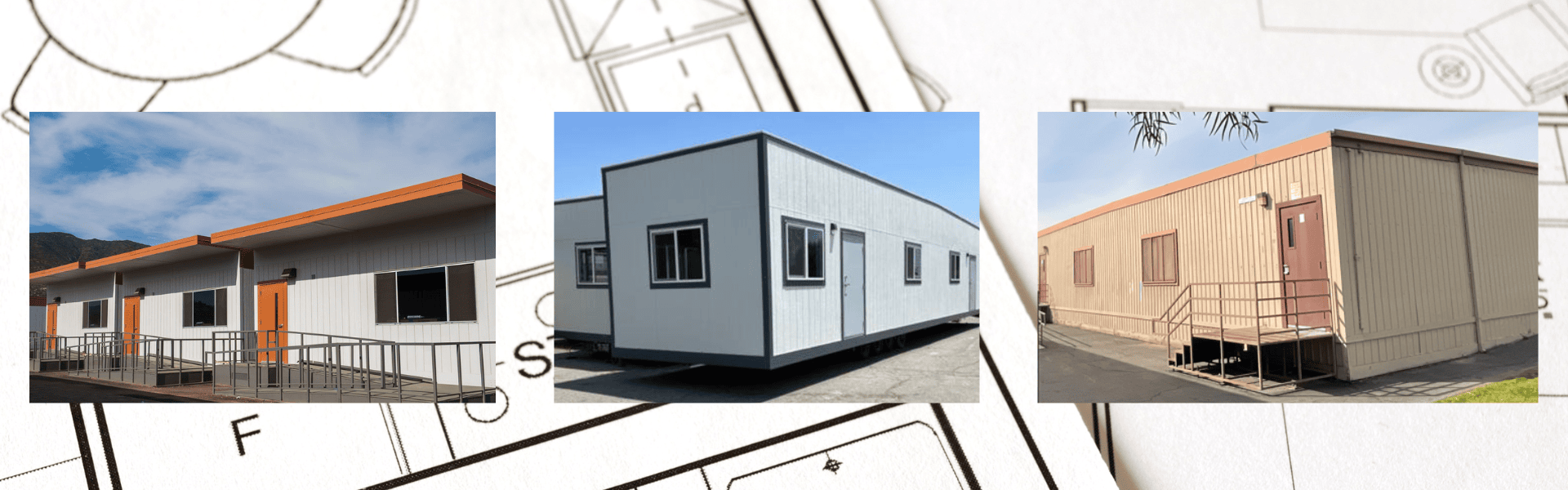


This article includes useful tips, answers to common questions, and a helpful locker room space-planning guide if you are considering using a mobile modular trailer to add locker room space to your business facility, school campus, or recreational park.
Adding locker room space for students, staff, or visitors at your school or business facility can be relatively easy, fast, and affordable if you decide to use a mobile modular or “portable” building. The key to keeping this type of project simple is to know exactly what your space needs are and how you will incorporate one or multiple mobile modular locker room trailers into your facility plan before you begin sourcing suppliers.

Step#1: Answer These Key Questions
What Should the Floor Plan of a Locker Room Facility Look Like?
The floor plan of a locker room facility should be designed around the number of workers using the building and how the space will flow during shift changes. A well-designed layout helps prevent congestion and allows workers to move efficiently between lockers, changing areas, restrooms, and other facilities.
Most modular locker room floor plans include several key areas:
- Locker rows arranged to allow easy access and adequate walking space
- Bench seating placed in front of or between locker rows for changing
- Clear traffic flow paths so workers can move through the space comfortably
- Restroom and support areas located where they can be accessed easily without disrupting locker areas
- Space for showers when the facility is designed for workers who need to clean up after their shift
For larger crews, the floor plan may also include separate sections for male and female workers, additional storage space, or areas for maintenance supplies.
When planning a modular locker room building, the floor plan should be customized to match the workforce size, site conditions, and the facility’s use throughout the day. A well-designed layout improves efficiency, comfort, and overall functionality.
How Many Lockers Are Needed?
The number of lockers required in a shower and locker trailer depends on how many workers will use the facility during a single shift. As a general rule, each worker should have access to one locker for storing personal items, uniforms, and safety equipment.
For example:
- 40 workers per shift → 40 lockers minimum
- 50 workers per shift → 50 lockers minimum
In industrial environments such as construction sites, mining operations, cement plants, and manufacturing facilities, many companies install additional lockers (10–20% extra) to allow for shift changes, temporary workers, and equipment storage.
A well-designed modular locker and shower building typically includes:
Separate locker areas for men and women when required
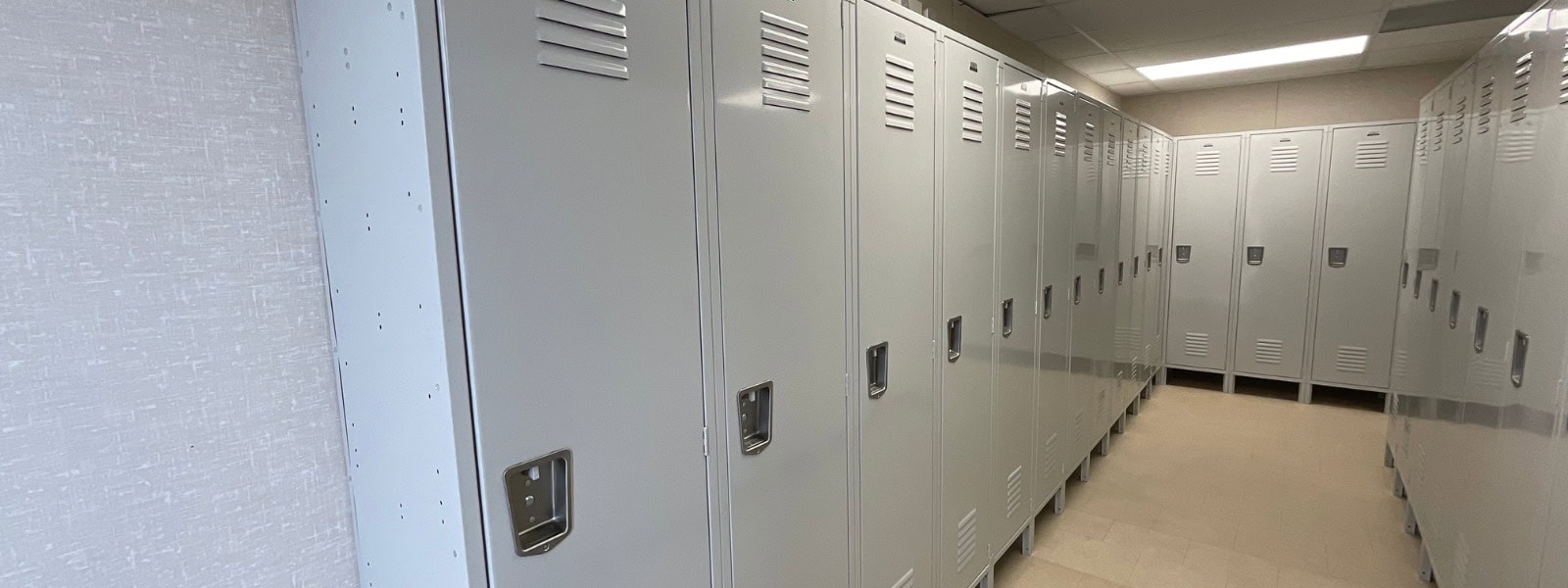
Full-height steel lockers
Bench seating for changing
Showers and restrooms sized for the workforce
Should Lockers in a Locker Trailer Be Secure?
Yes. Lockers in the shower and locker trailer should be secure because workers often store personal belongings, uniforms, and safety equipment there. Items such as phones, wallets, work gear, and clothing are commonly placed in lockers while employees shower or change at the end of a shift.
For this reason, lockable steel lockers are the industry standard in modular shower and locker buildings used at construction sites, industrial plants, energy facilities, and manufacturing operations.
Common locker security configurations include:
- Padlock-ready lockers with a built-in hasp
- Lockers with integrated keyed locks
- Lockers with combination locks
Most modular locker and shower trailers feature durable, full-height steel lockers adjacent to the shower and changing areas, allowing workers to securely store their items while they use the facility.
Should a Locker Trailer Include Space for an Attendant, Storage, or Other Support Areas?
In many projects, locker room facilities require additional space beyond the lockers themselves to support daily operations. Depending on the size of the workforce and how the facility will be used, companies often include areas for storage, maintenance supplies, or a locker room attendant.
Common support spaces in modular locker room buildings include:
- Locker room attendant or supervisor space for monitoring and assisting with facility operations
- Janitorial or maintenance closets for storing cleaning supplies and equipment
- Uniform or gear storage areas for work clothing, safety equipment, or replacement uniforms
- Bench seating and changing areas that allow workers to comfortably change in and out of work gear
Including these types of support spaces helps improve organization, cleanliness, and daily workflow, especially at larger industrial or construction sites where many workers use the locker facility throughout the day.
When planning a modular locker room building, it is important to consider any additional operational space that may be needed beyond the lockers themselves.
Will Seating Be Needed in the Locker Room?
Yes. Seating is an important feature in most locker room facilities because workers often need a place to sit while changing clothes, putting on safety gear, or preparing for their shift.
In commercial and industrial locker room environments, bench-style seating is the most common solution. Benches are typically placed directly in front of locker rows or in the center of the changing area so workers can comfortably access their lockers while seated.
Common seating options in modular locker room buildings include:
- Wood or composite locker room benches
- Wall-mounted benches to maximize floor space
- Freestanding benches placed between locker rows
- Heavy-duty industrial benches designed for high-use environments
Providing adequate seating improves comfort, efficiency, and worker flow, especially at facilities where large crews arrive or depart at the same time.
When planning a modular locker room building, seating should be considered early in the layout process to ensure there is enough space for workers to change comfortably while accessing their lockers.
Will Showers and Bathrooms Be Required in the Locker Facility?
In many industrial and commercial projects, showers and bathrooms are an important part of a complete locker room facility, especially when workers are exposed to dirt, chemicals, dust, or physically demanding conditions during their shift.
Showers allow workers to clean up before leaving the job site, while restrooms provide convenient access for employees throughout the workday. Many companies choose to include both when installing a modular locker room building or locker trailer.
Common features included in locker facilities with showers and restrooms include:
- Multiple shower stalls with privacy partitions
- Toilets and urinals, depending on the workforce size
- Handwashing sinks and mirrors
- Durable flooring and wall finishes designed for wet environments
- Electric or propane water heaters to supply hot water for showers
Including showers and bathrooms can improve worker comfort, hygiene, and job-site safety, particularly in industries such as construction, mining, energy, manufacturing, and heavy-industrial operations.
When planning a modular locker room, restroom, and shower facility, it is important to size the plumbing fixtures properly based on the number of workers expected to use the building during a typical shift.
Are Separate Male and Female Locker Facilities Required?
In many workplaces, separate locker and restroom facilities for men and women are required to comply with workplace standards and employee privacy expectations. The exact requirements can vary depending on local regulations, workforce size, and company policies.
When planning a modular locker room facility, there are generally two common layout approaches:
- Separate buildings – One building for male employees and another for female employees. This approach is often used at large industrial sites where the workforce size justifies multiple structures.
- One building with partitioned areas – A single modular building divided into clearly separated male and female sections with individual entrances and interior partitions.
Both layouts can include lockers, changing areas, restrooms, and showers designed to support the number of workers expected to use the facility during a shift.
When designing a modular locker room and shower building, it is important to determine early whether the facility will serve both male and female workers and how the space should be divided to provide appropriate privacy and efficiency for the workforce.
Will the Locker Room Require Heating and Air Conditioning?
In most cases, locker room facilities should include heating and air conditioning (HVAC) to provide a comfortable environment for workers using the space before and after their shifts. Temperature control is especially important in locker rooms where employees are changing clothes, storing uniforms, or preparing for work.
In addition to comfort, HVAC systems also help with ventilation and moisture control, which is important in locker facilities where humidity and damp clothing can create odors and condensation.
Common HVAC solutions used in modular locker room buildings include:
- Wall-mounted packaged HVAC units
- Through-wall heating and cooling systems
- Ducted HVAC systems in larger modular buildings
Providing proper heating, cooling, and ventilation helps maintain air quality, comfort, and overall facility durability, especially in high-use locker room environments.
What Type of Water Heaters Will Be Needed?
If the facility includes showers, sinks, or other fixtures requiring hot water, a properly sized water heater system will be needed to support daily use. The type of water heater installed typically depends on the available utilities at the site and the number of workers expected to use the facility during a shift.
The most common water heating options used in modular locker room and shower facilities include:
- Electric water heaters – Common when natural gas or propane service is not available. These systems are straightforward to install and work well for smaller facilities or moderate hot water demand.
- Natural gas water heaters – Often used when gas service is available and larger volumes of hot water are required. Gas systems typically recover hot water faster.
- Propane water heaters – A common solution at temporary or remote job sites where propane tanks are used to supply fuel.
When planning a modular locker room and shower building, it is important to consider how many people may be using the showers at the same time so the water-heating system can be properly sized to maintain consistent hot-water availability.
Size, Floorplan & Specifications
The majority of modular building and mobile office trailer companies throughout the United States have experience providing mobile modular locker room trailers in a range of sizes and floor plans. In some cases, suppliers have locker room trailers in stock and available for delivery, but in most cases, it’s common for a supplier to outfit an existing mobile office trailer with the exact number and style of lockers needed and rent or sell the customized structure at a competitive rate.
Here are some of the most common sizes of mobile office trailers available in the United States, along with the estimated number of standard lockers that can be installed in a given model.

Do you need more than a single-wide locker room trailer? Not to worry, mobile modular building suppliers throughout the United States can create any size and floor plan you need. For example, instead of a 12′ x 60′ mobile locker room trailer, you can add 12-foot sections to create much larger spaces, such as 24′ x 60′, 36′ x 60′, and much bigger “modular” buildings.
Step #2: Plan Your Site & Research Building Permits
Once you’ve made decisions about the specifications and floor plan of the modular locker room trailer, you will need to decide on the site where you want to locate the structure. In many cases, this is when you want to involve your site facility manager or planner to take full advantage of available space and create a scenario that makes the locker room easily accessible for users and in accordance with state and federal building codes, including the Americans with Disabilities Act (ADA) for wheelchair access ramps.
Knowing what size modular locker room trailer you need and where it will be located on your property will also make obtaining the necessary building permits from your local building and safety department much easier. When you meet with a local building official, be prepared to answer questions regarding the:
🗹 Trailer occupancy type
🗹 Handicap Accessibility
🗹 Site location
🗹 Site access (for fire and safety vehicles)
🗹 Fire & safety issues
Step#3: Make Smart Financial Decisions
After you have a good idea of what type of locker room space you need and where it will be located in your facility, it’s time to make smart financial decisions. For example, if you know you will need the locker room trailer for an extended period, it may be best to buy a used model or have a new model manufactured specifically for your needs. On the other hand, if your need is truly temporary, you will most likely want to enter into a rental contract for a set period with the ability to extend the agreement with ease.
What Factors Affect the Price of a Modular Locker Room Building?
The cost of a modular locker room facility can vary significantly depending on the size of the building, the number of lockers and plumbing fixtures, and whether the structure is an existing inventory building or a newly manufactured unit.
In general, the most affordable option is often an in-stock modular building or office trailer that can be modified to include lockers, restrooms, or shower areas. Because these buildings already exist, they can often be delivered and installed much faster than new construction.
Several key factors influence the overall price of a modular locker room project:
Building Size
Larger buildings require more materials, structural components, and transportation logistics. Common locker room layouts are created using modular sections such as 12′ x 60′, 24′ x 60′, or larger multi-section buildings.
Plumbing Requirements
Facilities that include restrooms, sinks, and especially showers will require additional plumbing infrastructure, floor drains, water heaters, and moisture-resistant finishes. These elements increase both installation complexity and overall cost.
Interior Build-Out
Locker rooms may include:
- Steel lockers
- Bench seating
- Privacy partitions
- Shower stalls
- Durable commercial flooring and wall finishes
The level of interior build-out and the number of fixtures will influence the total project scope.
HVAC and Ventilation
Locker facilities often require heating, air conditioning, and proper ventilation systems to maintain air quality and manage humidity.
Site Preparation and Installation
Site conditions also affect the final price. Typical installation considerations include:
- Foundations or pier systems
- Utility connections (water, sewer, electrical)
- ADA ramps and access systems
- Delivery and crane placement when required
New vs. Existing Buildings
Projects that use existing modular inventory buildings are usually the most economical option and can often be delivered more quickly.
Newly manufactured buildings or highly customized remodels typically require longer production timelines and higher construction costs.
Planning Ahead Helps Control Costs
One of the best ways to manage the cost of a modular locker room project is to clearly define the number of workers, lockers, showers, and support spaces needed before requesting quotes.
A well-planned project allows suppliers to recommend the most efficient building size and configuration, significantly reducing both construction and installation costs.
If you are evaluating a modular locker room project and would like guidance on building sizes, layout options, and available inventory, contact Matt Banes at iModular.com for expert assistance.
Tips for making a smart buying decision:
1.) If the image is important or you have a very specific design specification, buying a new structure is best. Suppliers in the United States are highly experienced in designing and manufacturing new mobile modular buildings, and the process is flexible and fast. Keep in mind that this will be more expensive than buying a used model and more time-consuming (though it’s still faster than conventional building).
2.) Your best long-term savings opportunity is to find an existing used locker room trailer or modular locker room building and buy it at a great price. If someone before you paid for the expenses of having the locker room built, then you will most likely benefit from the cost depreciation and normal wear and tear. Just be sure you conduct a thorough inspection of the model and understand exactly what you are buying.
3.) Sometimes renting is the only option and it’s not a bad option. If you have an exact timeline of how long you will need the locker room space…or if you even have a general “best guess” then renting can help you budget and plan for the usage without having to make a large upfront investment or borrow to make the purchase.
Keep in mind that if you need to customize the mobile modular unit with special lockers or other architectural features, the supplier will most likely want to charge you upfront for the modifications or amortize the cost of the customizations into the rental rate for the term of the agreement. Check the math and always negotiate the customization prices and any charges for returning the unit to its original plan at the end of the rental term. Remember, everything is negotiable.
4.) Suppliers will charge one-time fees for the delivery, installation, knockdown, and removal of the mobile modular building, so be sure to choose the easiest possible location to install the structure. Easy access to a level site with nearby utilities will always save you money.
Interesting Note: Modular Buildings for Industrial Locker Rooms with Showers
Many modular locker room buildings are installed at industrial facilities where workers need a place to change clothes, store gear, and shower after their shift.
These facilities are often referred to as:
- industrial locker room buildings
- worker locker and shower facilities
- crew change facilities
Industries that frequently install modular locker room and shower buildings include:
- cement plants
- manufacturing facilities
- refineries and energy plants
- mining operations
- large construction projects
Modular construction allows these facilities to be installed much faster than traditional construction while still providing durable locker areas, showers, restrooms, and changing space for large crews.
Need more information about modular buildings? iModular.com is here to help answer your questions and assist you with finding the best supplier for your space needs in the U.S. or Canada. Call our Toll-Free Modular Building Help Line at (800) 806-7485.