

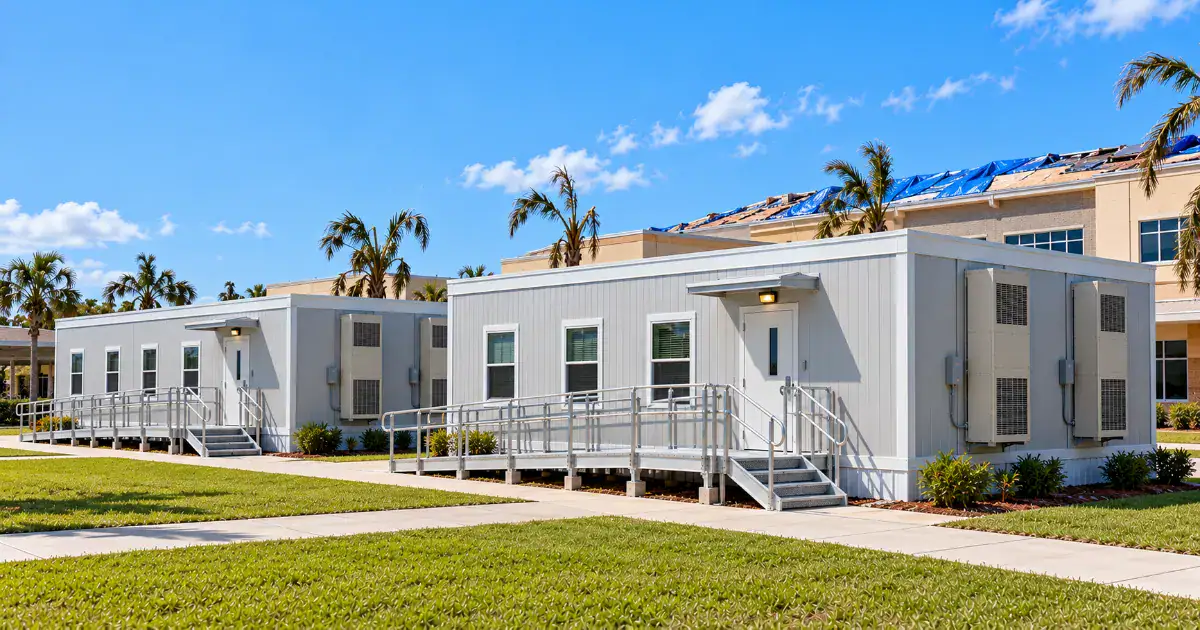

When a hurricane takes a school wing, a clinic, or a county office out of service, Florida disaster response modular buildings are one of the fastest ways to get people back under a roof. A relocatable classroom, office, or restroom building can be sourced, permitted, and set on site in weeks instead of the months a permanent rebuild takes. Here’s how to plan for it, what Florida’s rules require, and how iModular.com helps you find the right building quickly.
Why relocatable buildings fit Florida recovery work
Recovery space has to be ready fast, last as long as the rebuild takes, and leave when the permanent building reopens. That’s exactly what relocatable buildings are designed to do. The Modular Building Institute’s 2026 Annual Report lists disaster response and emergency relief as a core market for the industry and names climate resilience and disaster response as one of five drivers of relocatable-building demand through 2030.
Common recovery uses in Florida include:
- Swing classrooms while a damaged school or church education wing is repaired.
- Temporary offices for city, county, and utility staff whose buildings are closed.
- Clinic and intake space for healthcare providers working out of a damaged facility.
- Restroom and break buildings for crews and displaced staff on a recovery site.
- Field offices for contractors and adjusters running a large rebuild.
Florida rules still apply after a storm
An emergency doesn’t suspend the code. A modular building installed in Florida generally needs the state’s DBPR insignia and a manufacturer’s data plate, and your local building department still permits the foundation, tie-downs, and utility connections. Our guide to Florida modular building certification covers how that works.
Two points matter most for recovery buildings:
- Wind rating. Florida Building Code wind requirements are among the strictest in the country, and higher still in the High-Velocity Hurricane Zone (Miami-Dade and Broward). A used building moved to a site with a higher design wind speed than it was built for may need state recertification under s. 553.375 of the Florida Statutes, or local permitting and a certificate of occupancy instead.
- Occupancy. A building approved as an office isn’t automatically approved as a classroom. Changing the use can trigger recertification too, so tell us how the space will be used before we start looking.
Checking the data plate’s design wind speed and occupancy before you commit is the single best way to avoid a building that can’t be permitted where you need it.
Plan before hurricane season, not after
The organizations that get space fastest after a storm are the ones that planned for it. Before the next season starts, it’s worth knowing:
- which buildings or wings you’d need to replace and how many square feet that is,
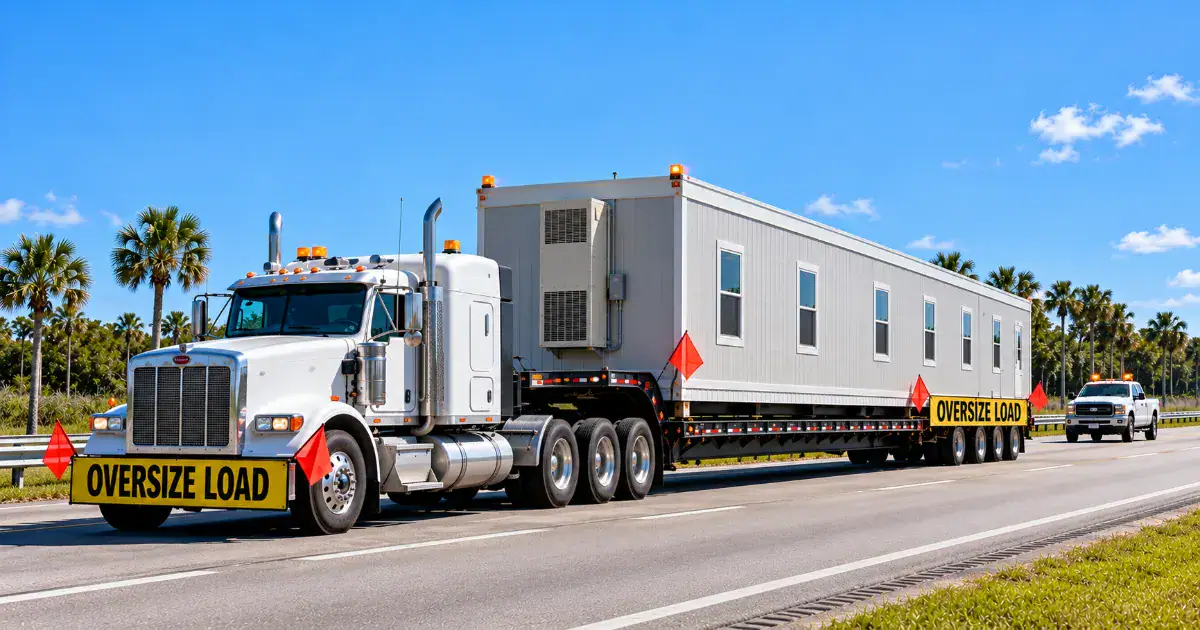
- where on your property a relocatable building could go, with access for a delivery truck,
- where power, water, and sewer could connect, and
- whether you’d rent for the length of the rebuild or buy and keep the building afterward.

A short planning call now can save weeks later, when every supplier in the region is fielding the same calls.
Get Florida recovery building prices fast
Answer a few quick questions and get matched with a Florida modular building supplier.
What working with iModular.com looks like
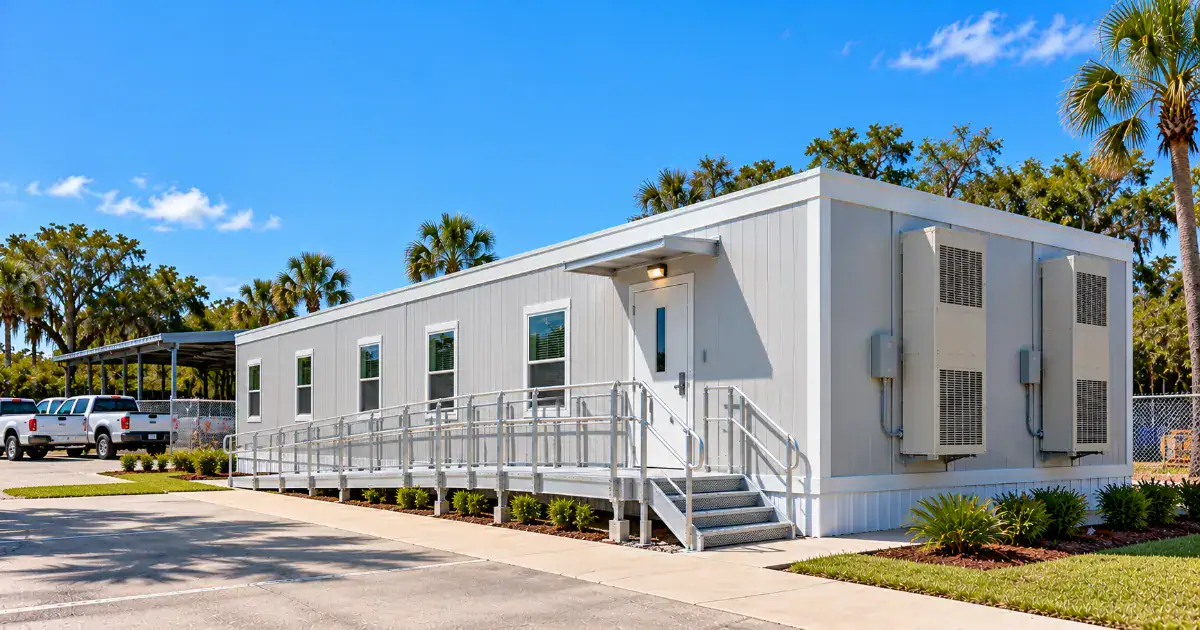
In Florida, here’s how we help: we size the space, look for available buildings that match your wind zone and occupancy, flag the permitting steps, and broker the right building for your site. iModular.com brokers modular buildings nationwide, including Florida.
Rent, buy, or sell
Most recovery space is rented for the length of the rebuild. If you expect to need the building again, or want it on hand for future seasons, buying can make more sense. When the permanent building reopens and the relocatable is no longer needed, iModular.com buys and trades in used buildings nationwide. Call and ask for Matt, or see our sell your modular building page.
Frequently asked questions
How fast can a modular building be set up after a hurricane in Florida?
It depends on what’s available, your site, and how quickly your local building department can permit the installation. A building that’s already DBPR-approved for your wind zone and use is the fastest path. Delays usually come from site prep, utilities, and permitting rather than the building itself.
Do emergency modular buildings in Florida still need permits?
Yes. The building generally needs the state’s DBPR insignia, and your city or county permits the foundation, tie-downs, utility connections, and site work. Ask your local building official early whether any emergency procedures are in effect.
Can a used modular building be moved to a coastal Florida site?
Sometimes. If the new site has a higher design wind speed than the building was built for, Florida law may require recertification before the move, or local permitting and a certificate of occupancy instead. Check the data plate before you buy.
Should we rent or buy recovery space?
Rent if you need the space only for the length of a rebuild. Consider buying if you expect to keep using the building or want it ready for future storms. iModular can compare both against your timeline.
Does iModular.com broker modular buildings in Florida?
Yes. iModular.com brokers modular buildings nationwide, including Florida. Call Matt at (800) 806-7485 to talk through your project.
Written by Matt Banes, iModular.com President, 38 years in the modular building industry. Last updated: October 2026.

Leave a Comment