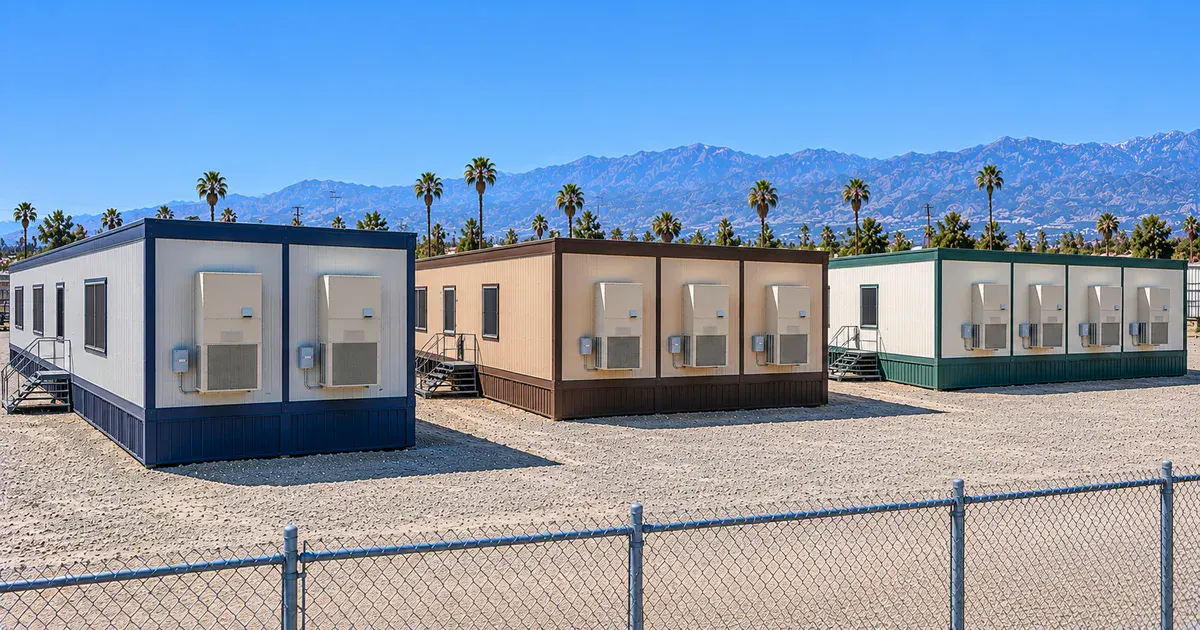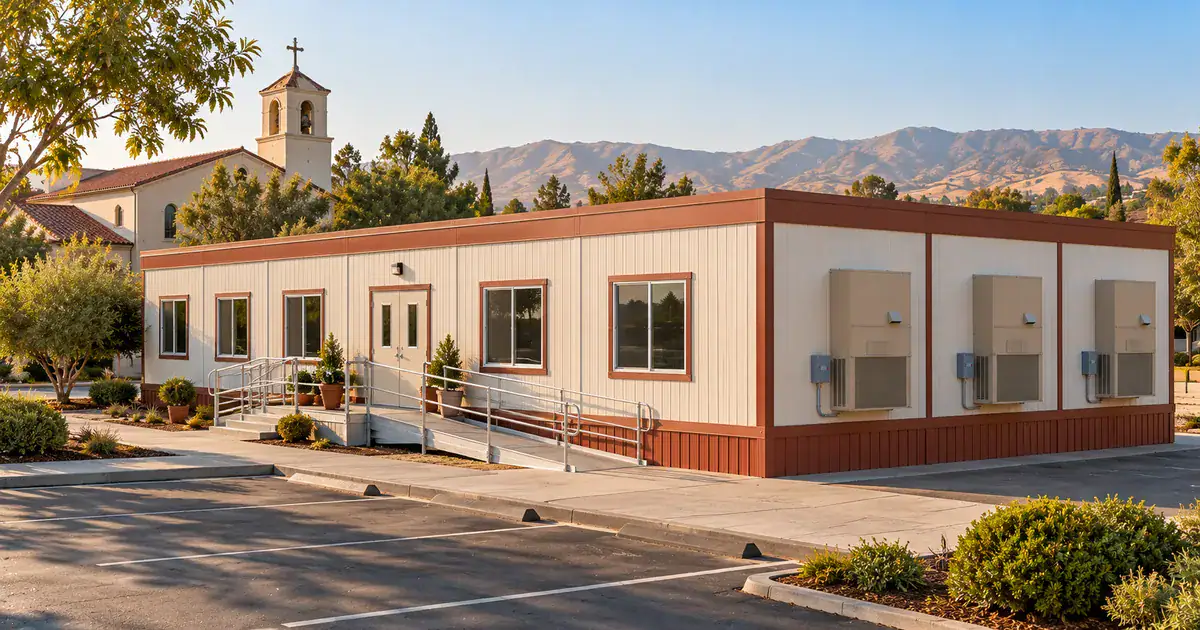

The foundation under a modular building determines three things clients care about most: how fast it can be installed, how much it costs, and whether it can be moved again later. California modular projects generally use one of five foundation systems, and picking the wrong one for the site or the occupancy type can add weeks — or thousands of dollars — to a project. Matching the right modular building foundation systems to your site and occupancy type from the start avoids that cost entirely.
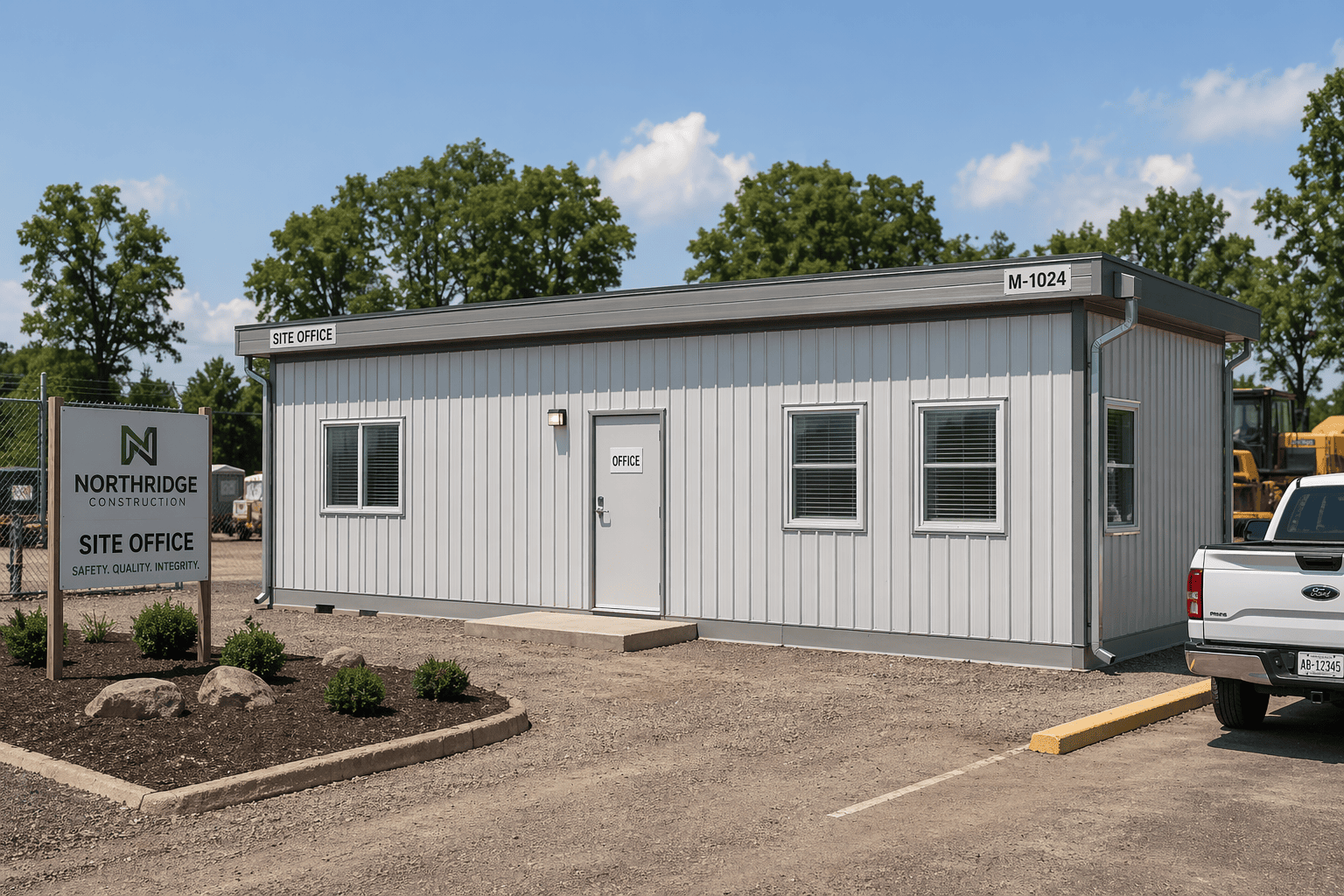
CP Pier System — one of the most common modular building foundation systems for HCD projects
The CP Pier System is a state-approved (California), powdercoated black, adjustable steel pier system rated for 100 mph wind loads and 100 lb snow loads. It’s the fastest and most cost-effective foundation for portable classrooms and office trailers, and it’s removable — meaning the building can be relocated later without demolishing a permanent foundation. On relatively flat, stable ground, local jurisdictions typically approve CP Pier installations without requiring special engineering, which is a major reason it’s the default choice for most HCD projects.
Pier and pad
Pier and pad uses concrete pads poured at grade with piers set on top — similar in function to the CP Pier System, but with a poured-in-place concrete base instead of a precast footing. It’s the better choice on soft or uneven soil, where a standard pier alone wouldn’t provide enough stable bearing surface.
Perimeter foundation
A continuous concrete foundation runs around the full perimeter of the building. Perimeter foundations are required for some DSA projects and for installations meant to be permanent. They cost more and take longer to install than a pier system, but they create a more finished, permanent appearance — closer to what you’d see on a site-built structure.
Slab-on-grade
A full concrete slab poured at the site. This is the foundation of choice for permanent installations, heavy equipment loads, and industrial uses. It’s also the highest-cost and longest-timeline option of the five — and once a building is set on a slab, it’s not easily relocated. Slab-on-grade makes sense when permanence is the goal, not when flexibility is.
Engineered modular building foundation systems for DSA projects
Public K-12 projects reviewed under DSA require site-specific engineering — seismic calculations, a soils report, and a structural design tailored to that exact site. This is significantly more involved, and more expensive, than the standard CP Pier approach used on most HCD projects, which is one of the reasons DSA timelines run longer than HCD timelines across the board.
Which modular building foundation system fits your project
| Foundation | Best for | Relative cost | Relocatable? |
|---|---|---|---|
| CP Pier System | Standard HCD classrooms and office trailers, flat stable ground | Lowest | Yes |
| Pier and pad | Soft or uneven soil | Low–moderate | Yes |
| Perimeter foundation | Some DSA projects, permanent installs | Moderate–high | No |
| Slab-on-grade | Permanent, heavy equipment, industrial | Highest | No |
| Engineered DSA foundation | Public K-12 campuses | Highest | No |
No single option wins on every project — the right modular building foundation systems choice comes down to soil conditions, whether the building needs to be relocatable, and whether HCD or DSA is reviewing the job.
Seismic design and your foundation
California modular buildings are engineered at the factory for a specific Seismic Design Category (SDC) based on location — SDC D covers most California coastal and urban areas and is the most common category for iModular projects, while SDC E applies near active faults and requires engineered shear walls, hold-downs, and seismic separation from adjacent structures. The site-specific foundation design has to account for that seismic load, which is why a soils report is always worth getting in high seismic zones regardless of which foundation type you’re leaning toward.
Frequently asked questions
Is the CP Pier System strong enough for California wind and snow loads?
Yes — it’s a state-approved (California), powdercoated black, adjustable steel pier system rated for 100 mph wind loads and 100 lb snow loads, which covers the vast majority of California site conditions outside of extreme mountain snow zones.
Can I switch foundation types after the building is delivered?
Not without significant additional work. Foundation type needs to be decided during planning since it affects site prep, permitting, and — for perimeter and slab foundations — whether the building can be relocated later.
Does foundation type affect my HCD or DSA approval?
Yes. HCD projects on stable, flat sites typically move through plan check faster with a standard CP Pier foundation, since it usually doesn’t require special engineering. DSA projects require engineered, site-specific foundation design regardless of building type — that’s built into the DSA process itself.
Not sure which foundation your site needs? Call (800) 806-7485 or request California pricing — we’ll factor site conditions and occupancy type into the right foundation recommendation before you commit to a plan.
Related California resources
- Stock modular buildings in California
- California modular building occupancy classifications
- California modular building pricing and availability
- Seismic design for California modular buildings
- ADA ramp requirements for California modular buildings
- Industrial locker rooms and shower buildings in California
- Modular buildings for tribal governments in California
iModular.com — California modular building specialists since 1998. Last updated September 2026.